) "Office Depott & OfficeMax")
) "Office Depott & OfficeMax")
 Sign up for
 Calculators













Related Products

Alliance Phenol-Free Thermal POS Rolls, 2-1/4" x 50',

Sharp® EL-1901 Digital Printing Calculator, White

Victor® 1208-2 Compact Commercial Printing Calculator
Do I need a calculator?
Calculators are used to solve math problems. More advanced calculators, like scientific calculators, can also be used to solve complex equations.
Students may need calculators for coursework like algebra or calculus. Professionals may also need calculators for jobs like accounting and bookkeeping. Some people may also want a calculator for personal use, such as for preparing taxes or calculating household expenses.
There are many reputable brands of calculators, including:
What type of calculator should I get?
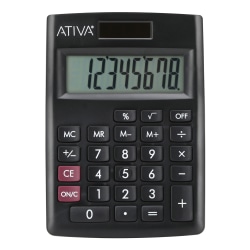
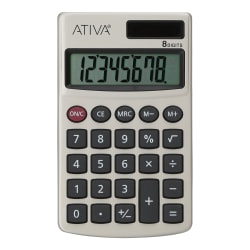
There are many styles of calculators. A basic calculator is meant to do basic arithmetic. Also called a four-function calculator, it can perform addition, subtraction, division, and multiplication. A basic calculator is usually sufficient for people who are doing simple math.
A scientific calculator can do advanced functions, like logarithm problems, exponential problems, and more. Students in advanced courses like trigonometry may need a scientific calculator. Scientific calculators may also be required for people who work in certain fields like engineering.
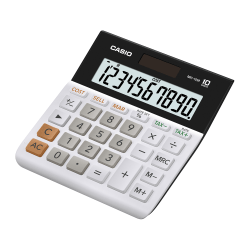
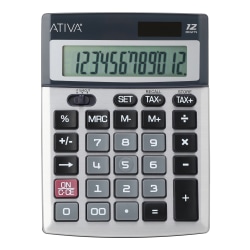
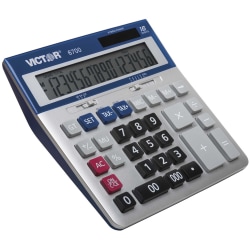
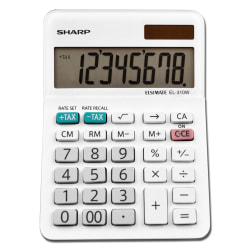
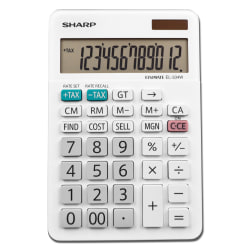
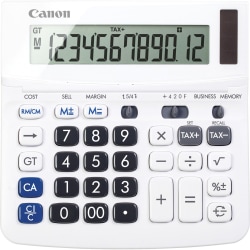
Desk calculators are often used in professional settings, such as by accountants. They are larger than basic calculators and have additional functions, such as being able to calculate percentages and square roots. They also are larger with more buttons and have a display that tilts up. This is because they’re designed to lie flat on a desk while still being easy to read.
A kid’s calculator or classroom calculator is a basic calculator but designed for children. These calculators tend to have bright colors and large buttons, making them easier for small hands to manage.
What type of calculator do I need?
The right calculator depends on the purpose. While a four-function calculator might be sufficient for personal use, like calculator expenses, people who need to perform more advanced functions, like exponents and logarithms, may need a scientific calculator.